The Imitation Game
The Intelligence Bottleneck: Is Our Own Cognition Limiting AI's Future?

An octopus, renowned for its intelligence and problem-solving abilities, effortlessly unscrews a jar from the inside to reach a tasty crab. Its neurons are distributed throughout its body, with its arms capable of independent action and decision-making. It doesn't 'think' like a human, with a centralized brain directing its actions. Its intelligence is embodied, distributed, and profoundly alien. Are we limiting AI by insisting on a centralized, brain-like structure, when nature itself offers such compelling examples of alternative cognitive architectures?

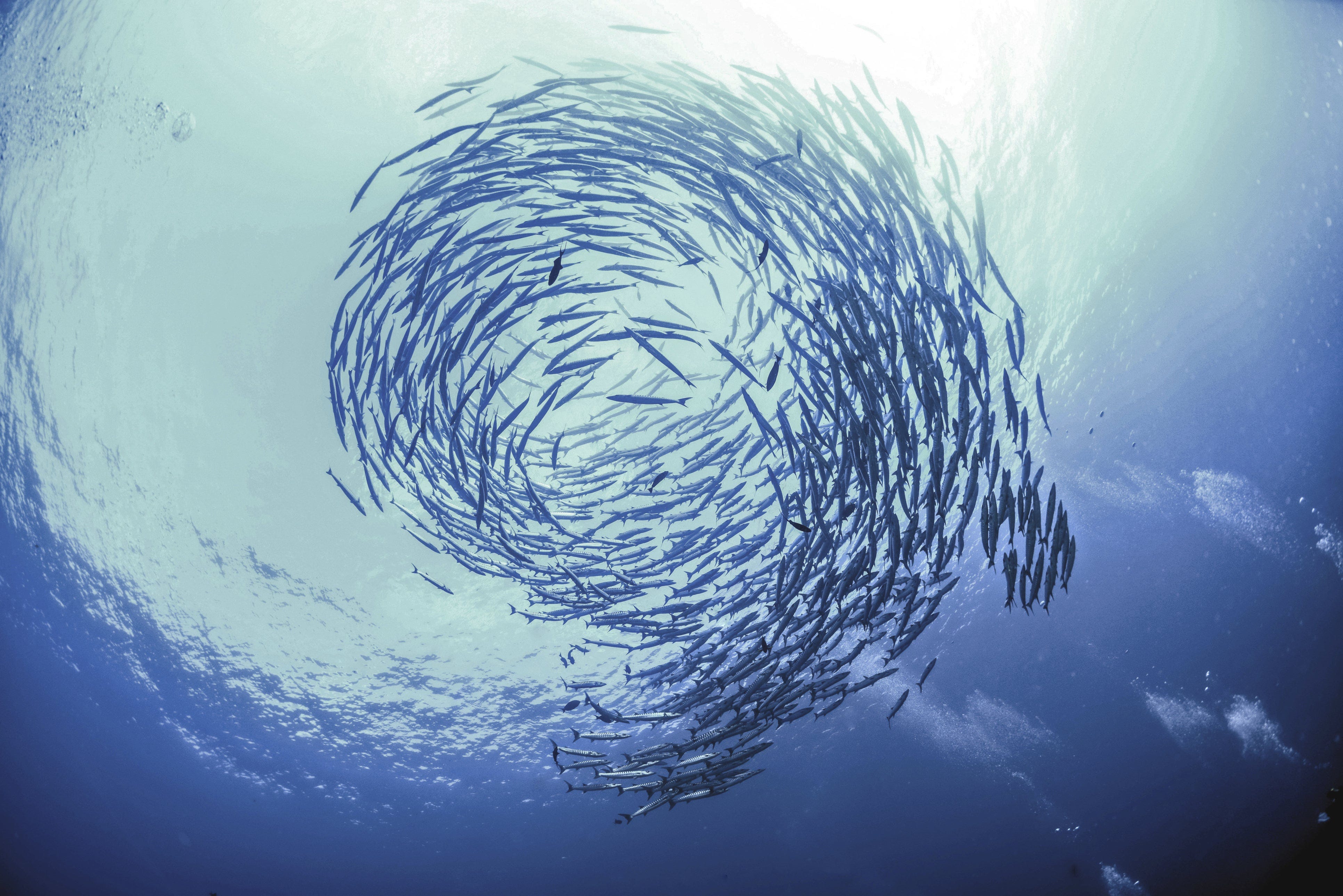
The octopus stands in stark contrast to another compelling model of intelligence found in nature: the collective. Consider the intricate societies of ants, bees, or termites. Individually, these insects possess limited cognitive abilities. Yet, through simple interactions and decentralized communication, they achieve remarkable feats of engineering, resource management, and problem-solving.
The Digital Mirror: Building AI in Our Image
To understand the current trajectory of AI, it's helpful to see it as a reflection of our own internal structure. We've essentially built a digital mirror of our minds. The computer's CPU functions as its cognitive center, much like our brain. The intricate network of data buses acts as a nervous system, ferrying information throughout the system. Input devices like cameras and keyboards serve as sensory neurons, feeding data to the central processor. More sophisticated sensors, capable of both input and output, mirror the two-way communication of our own sensory-motor systems. The hierarchy of memory – from the vast, slow storage of hard drives (long-term memory) to the rapid access of RAM (short-term memory) and the lightning-fast cache (immediate recall) – closely parallels how we store and retrieve information. This human-inspired design has been remarkably successful, but it also raises a critical question: are we unconsciously limiting ourselves by using our own minds as the sole template for intelligence?
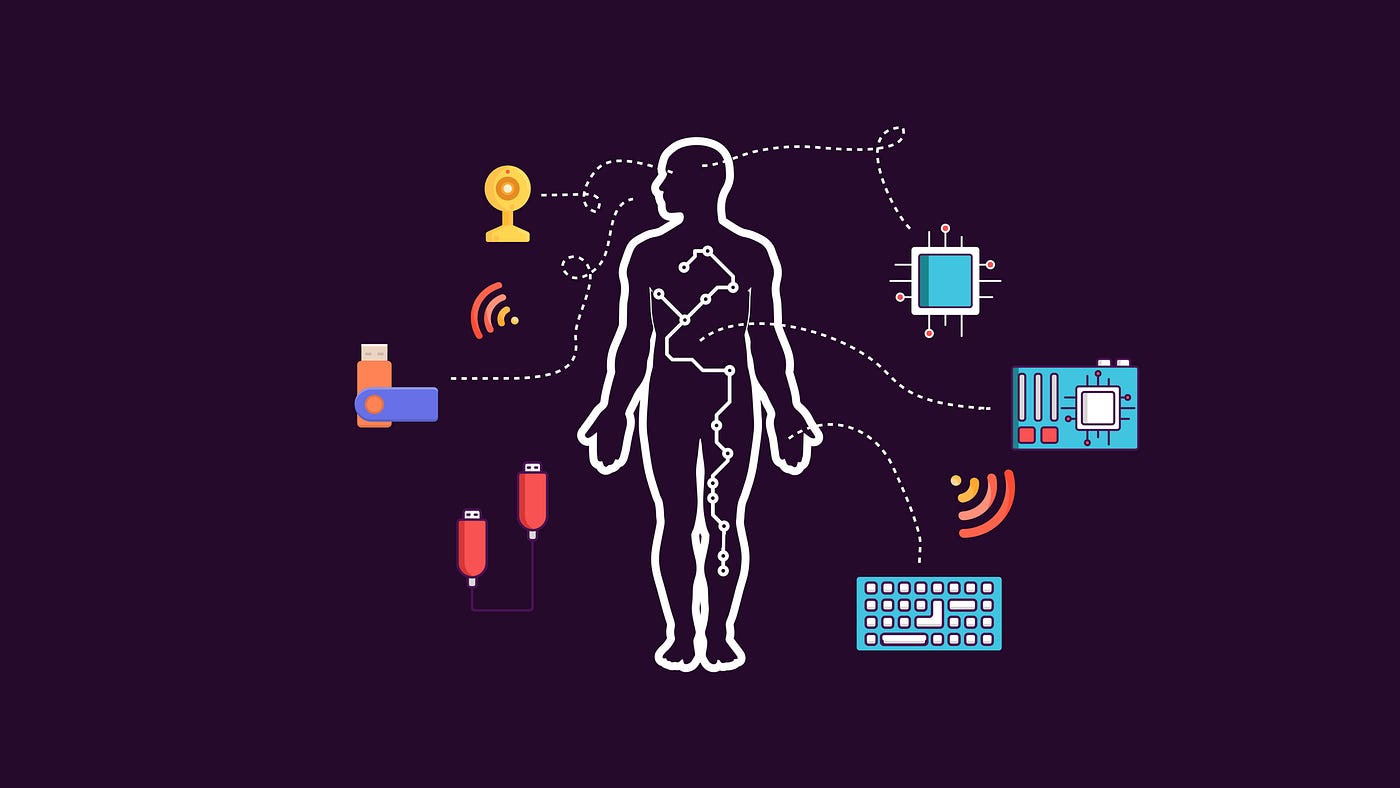
While this human-centric approach has yielded remarkable progress in AI, it raises a fundamental question: are we inadvertently limiting the potential of artificial intelligence by defining it solely through the lens of our own cognitive architecture?
The Architecture of Thought: Computer vs. Brain
The fundamental architecture of modern computers closely parallels the organization of the human brain and nervous system. This is evident in the following key components:
Central Processing Unit (CPU) vs. Brain
CPU: The primary computational engine of a computer, executing instructions and performing calculations. Modern CPUs often feature multiple cores and specialized units (e.g., GPUs for parallel processing of graphical data).
Brain: The central organ of the nervous system, responsible for all cognitive functions. It comprises specialized regions (e.g., prefrontal cortex, visual cortex, motor cortex) each handling distinct processing tasks.
Analogy: Both the CPU and the brain serve as the central command center, receiving input, processing information, and generating output. Specialization within each allows for efficient handling of diverse tasks.
Data Bus vs. Nervous System
Data Bus: A physical communication system within a computer that transfers data between the CPU, memory, and peripherals. Its bandwidth (data transfer rate) is a critical determinant of system performance.
Nervous System: A complex network of nerve fibers (neurons) that transmit electrochemical signals throughout the body. The speed and efficiency of signal transmission are crucial for reflexes, sensory perception, and motor control.
Analogy: Both systems act as high-speed communication networks, enabling rapid and coordinated information flow between different parts of the system. Bottlenecks in either (e.g., slow bus speed, nerve damage) significantly impair overall function.
Unidirectional Sensors vs. Sensory Neurons (Input Only)
The interaction between an intelligent system and its environment is mediated by input and output mechanisms, mirroring the sensory and motor functions of biological organisms.
Unidirectional Sensors: Devices like microphones, cameras, and light sensors that capture information from the environment and convert it into digital signals for processing.
Sensory Neurons: Specialized nerve cells (e.g., photoreceptors in the eye, mechanoreceptors in the skin) that detect stimuli and transmit signals to the brain or spinal cord.
Analogy: Both serve as one-way input channels, converting external stimuli into a format that the central processing unit can understand.
Bidirectional Sensors vs. Sensory-Motor Loops
Bidirectional Sensors/Actuators: Devices capable of both receiving input and generating output. Examples include haptic feedback systems (providing tactile sensations) and robotic actuators (controlling movement).
Sensory-Motor Loops: The interconnected pathways of sensory and motor neurons that enable organisms to respond to stimuli. For instance, the reflex arc allows for rapid, involuntary responses to potentially harmful stimuli (e.g., touching a hot surface).
Analogy: Both systems enable two-way communication, allowing for dynamic interaction with the environment, feedback-driven adjustments, and complex behaviors.
Dive deeper into the future of AI and the mysteries of intelligence. Subscribe for more explorations of technology, neuroscience, and the fascinating possibilities beyond human-centric thinking.
Memory
Both computers and human brains utilize a hierarchical memory system to optimize information storage and retrieval, characterized by trade-offs between speed, capacity, and persistence. This structure is directly related to learning processes.
Computer Component: HDD/SSD
Human Memory Analogue: Long-Term Memory
Characteristics: High capacity, slow access, non-volatile (persistent).
Examples:
Computer: Storing operating system files, applications, documents, photos, and videos on a hard drive or solid-state drive.
Human: Remembering childhood events, learned facts (e.g., historical dates, scientific concepts), and personal experiences from years ago. The ability to ride a bike after years.
Computer Component: RAM (Random Access Memory)
Human Memory Analogue: Short-Term/Working Memory
Characteristics: Medium capacity, fast access, volatile (temporary).
Examples:
Computer: Holding the data and instructions for currently running programs and processes. This allows the CPU to quickly access the information it needs without constantly retrieving it from the slower HDD/SSD.
Human: Remembering a phone number just long enough to dial it, holding a sentence in mind while you write it down, or performing mental calculations (e.g., adding a series of numbers).
Computer Component: CPU Cache
Human Memory Analogue: Immediate Recall/Skills (often procedural memory or highly practiced information)
Characteristics: Low capacity, extremely fast access, volatile (temporary).
Examples:
Computer: Storing frequently used instructions or data that the CPU needs to access repeatedly in a very short period. This drastically speeds up processing for common operations. Examples include recently accessed web page elements, parts of code that are executed in a loop, or frequently used variables.
Human: Typing on a keyboard without looking at the keys (muscle memory), a musician playing a well-rehearsed piece of music fluently, or a fluent speaker immediately retrieving the correct words and grammar without consciously thinking about each individual element. Catching a ball.
This hierarchical memory structure isn't just about storage; it's intimately connected to how both computers and brains learn.
Learning
The learning process, both in biological brains and artificial neural networks, hinges on adjusting the connections between units. Just as humans have a finite number of neurons, AI models have a limited number of artificial neurons. The principle "neurons that fire together, wire together" governs how these connections change. Repeatedly activating the same neural pathways strengthens those connections, making it easier to recall or perform associated tasks. Conversely, unused connections weaken and may eventually be pruned. This is why practice leads to improvement: we reinforce the neural pathways used for a specific skill. Similarly, AI models are trained by adjusting the "weights" of connections between artificial neurons. The training data guides this adjustment, strengthening connections that lead to correct outputs and weakening those that lead to errors. Thus, both biological and artificial learning involve selectively reinforcing beneficial connections within a finite network.
Beyond what we can see
While the brain-computer analogy has driven significant progress in AI, it overlooks a fundamental aspect of human intelligence: embodiment. Our cognition isn't confined to the neural activity within our skulls; it's inextricably linked to our physical bodies and our constant interaction with the physical world. We learn through sensory experiences – the feeling of warmth, the taste of food, the force of gravity. This embodied experience shapes our understanding of concepts like "up," "down," "heavy," or "soft," providing a foundation for abstract thought. A disembodied AI, existing solely as software, lacks this crucial grounding. It may process data representing these concepts, but it cannot experience them in the way a creature with a physical body can. This raises a critical question: can an AI truly grasp the richness and complexity of the world without the visceral, sensory input that shapes human understanding?

The limitations of disembodied AI become even more apparent when we consider the role of emotions in human intelligence. Emotions are not merely subjective feelings; they are powerful, body-based signals that influence our decision-making, social interactions, and even our perception of the world. Fear, for instance, is not just a mental state; it's a physiological response – a racing heart, heightened senses, a surge of adrenaline – that prepares us for action. Empathy, the ability to understand and share the feelings of others, relies on our own capacity to experience similar emotions. Can an AI, lacking the biological mechanisms to generate and experience these emotions, truly understand their impact on human behavior? Can it make ethical judgments, navigate complex social situations, or even appreciate art and literature, which often evoke strong emotional responses? Without the grounding of embodied emotions, AI's understanding of human experience may remain fundamentally incomplete.
Thinking forward
We stand at a unique moment in history, poised to create bits of intelligence that may one day surpass our own. Yet, in our rush to replicate ourselves, we risk recreating our limitations. The octopus, in its alien intelligence, offers a potent metaphor: perhaps the truest path to understanding intelligence, both artificial and natural, lies not in looking inward, but in looking outward, at the astonishing diversity of the world around us. The future of AI may depend less on perfecting the mirror, and more on embracing the unknown.