Beyond the Matrix
Unlocking Passion in Numerical Methods

The Unlikely Classroom
Have you ever felt that electric charge – that palpable energy – of a truly engaged classroom? I have, and it fundamentally changed how I think about teaching. Most people see Numerical Methods as a dry, unavoidable requirement for engineering students. But picture this: a packed lab at the University Politehnica of Bucharest, students crammed inside, overflowing into the hallway. And there I was, a young, long-haired, rocker-looking teaching assistant, tasked with making matrices and algorithms interesting to this overflow crowd. They weren't just present; they were genuinely eager to learn. In fact, I made it clear from the start: if their only goal was to pass the exam, they were probably in the wrong place. How did that classroom dynamic even happen?
From Whiteboard to Real World (and Later, to Digital Ink)
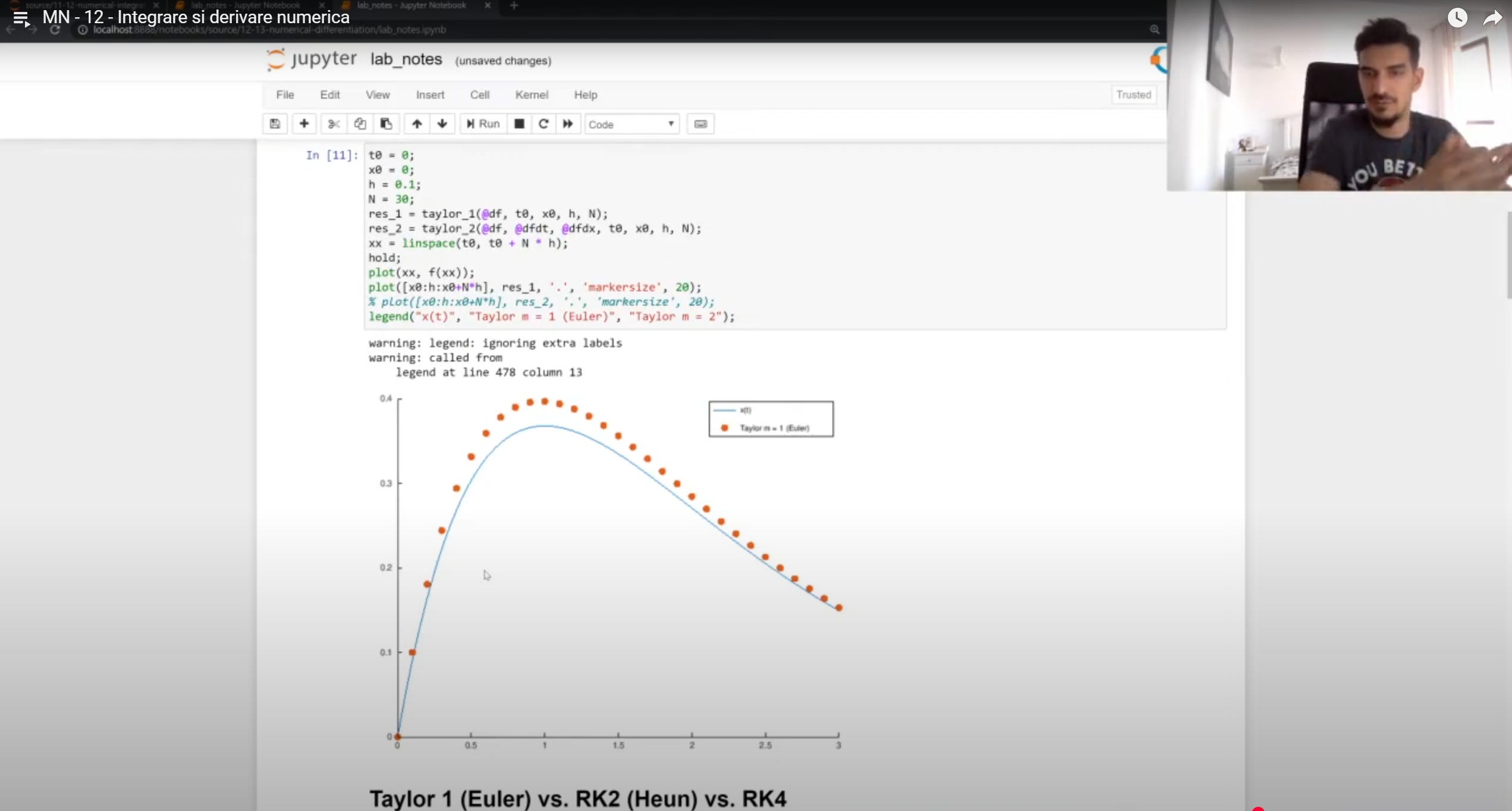
It wasn't magic, though it sometimes felt like it. Meticulous preparation was key, of course. I spent countless hours crafting explanations, anticipating where students might stumble, and practicing different approaches to each concept. My notebooks were filled with diagrams, real-world analogies, and anticipated questions – all in an effort to bridge the gap between abstract theory and tangible reality. Later, during the COVID pandemic, I adapted these methods to create a series of video tutorials, writing out equations and explanations in real-time on a digital pad (you can find those here). But even before that, in those packed in-person labs, the focus was always on making the material come alive.
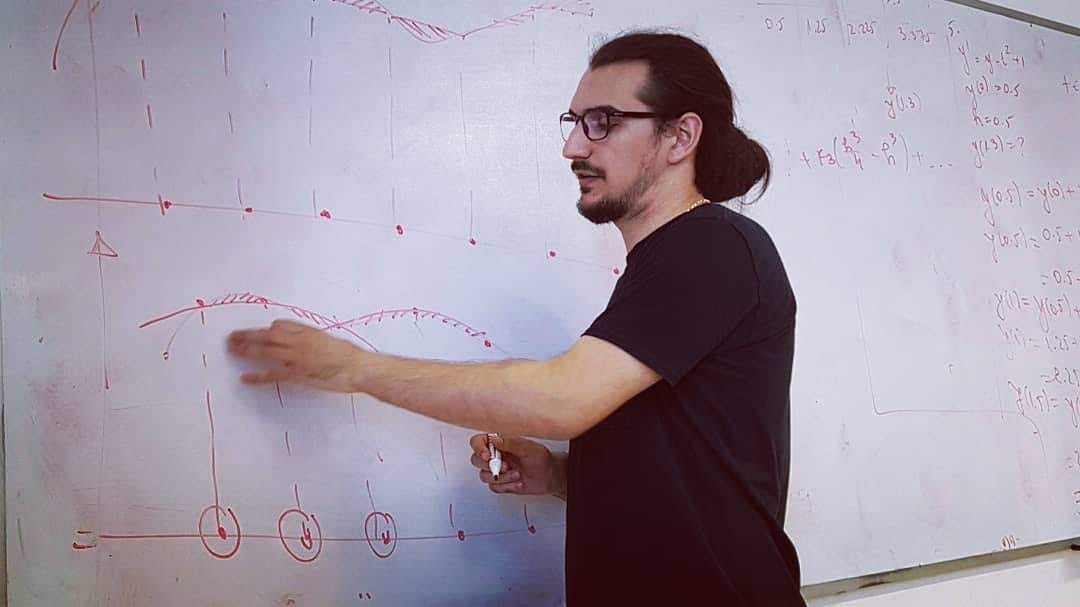
I also focused on creating interactive moments within the classroom. I remember vividly working through Taylor series approximations on the whiteboard, not just presenting the formula, but building it up step-by-step. Each added term became a visual demonstration of the curve refining, getting closer to the true function. Seeing that connection click for the students – that collective "aha!" – was priceless. And it wasn't just Taylor series; I strived to make every concept relatable.
The Power of Connection: Bringing Math to Life
But the real secret, I'm convinced, was connection. It wasn't just about my passion for the subject (though that certainly helped); it was about forging a connection between the students, the material, and the real world. I constantly used analogies to illuminate these seemingly abstract concepts.
Interpolation: We talked about how it's not just about filling in gaps in data, but how our brains do it constantly, like when we watch a movie and perceive smooth motion from a series of still frames.
Fast Fourier Transform (FFT): I explained how this powerful algorithm breaks down complex signals into their constituent frequencies – the very principle that allows apps like Shazam to identify songs from just a few seconds of audio. That one always got their attention.
Approximation: Approximating functions is key to predicting how different things will behave. We looked at a very simplified version of the SEIR model to understand how diseases spread.
These weren't just throwaway examples; they were integral to my teaching. By grounding the math in familiar experiences, I could make it feel less intimidating and more relevant.
Beyond the Grades
The response was overwhelming. Students would cluster around after class, brimming with questions and a genuine thirst for knowledge. They understood that this wasn't just about passing a test; it was about understanding the underlying principles. Years later, I still receive messages from former students who say the course sparked their love for math and programming; some even credit it with shaping their careers.
The Plus-Minus-Equal Strategy: A Path to Growth
Reflecting on this experience, it solidified a framework I now call the Plus-Minus-Equal strategy. It's a simple, yet profound, approach to continuous learning:
Plus: Learn from those with more experience. Be humble, seek mentors, and challenge your own understanding. I'm deeply grateful to my own professors, Florin Pop and Popescu George, for their guidance and inspiration. I also benefited immensely from the materials and insights left by the teaching assistants who came before me.
Minus: Teach those with less experience. The act of teaching clarifies your knowledge and reveals new perspectives.
Equal: Connect with peers. Find those who challenge your thinking, celebrate your successes, and offer support on your journey.
Humility is the linchpin of this entire system. It allows you to learn from those ahead, share with those behind, and connect with those beside you. My time teaching Numerical Methods perfectly embodied the "Minus" aspect: I learned far more than I anticipated through teaching. Students constantly challenged my explanations, forcing me to refine my thinking and, sometimes, admit I didn't have all the answers. That intellectual give-and-take was invaluable.
The Enduring Spark
That experience taught me a profound lesson: the most powerful teaching tool isn't a textbook or an algorithm; it's genuine passion, and the ability to connect with others. So, I challenge you: reflect on your own passions, and find ways to share them. You might be surprised by the connections you make, the lessons you learn, and the impact you have. The energy of a truly engaged environment, fueled by shared enthusiasm, is a force to be reckoned with. It all starts with that spark within you. So, are you plus, minus, or equal to your passions?